
An eye check takes time
“How long will my eye test take?”
It’s a perfectly reasonable question. We’re all busy, and time is precious.
But there’s another thing that’s precious too: your eyes.
At CapitalEyes, we believe a good eye examination shouldn’t be about getting you in and out as quickly as possible. A comprehensive eye check takes time — and we think that time is important.
Not just to check your vision, but to really understand your eyes and what your eyes do in a typical day, explain what we’re seeing and talk with you about what it might mean for your future.
There’s more to an eye check than reading the chart
When you come to see us for an eye examination, of course we want to know whether your glasses or contact lens prescription needs changing.
But that’s only part of what we’re doing.
We’re also looking at the health of your eyes and considering whether there are any changes or risk factors that need attention or monitoring.
Perhaps you’re myopic (short-sighted). Or maybe you’re hyperopic (long-sighted) or starting to notice the effects of presbyopia — that frustrating stage when your arms suddenly don't seem quite long enough to read the menu!
Perhaps we’re seeing early cataract changes, or there are signs or risk factors that could be associated with glaucoma. Maybe there are changes around the macula that we need to monitor, including early signs or risk factors for macular degeneration.
Finding these things is important. But what happens after we find them is important too.
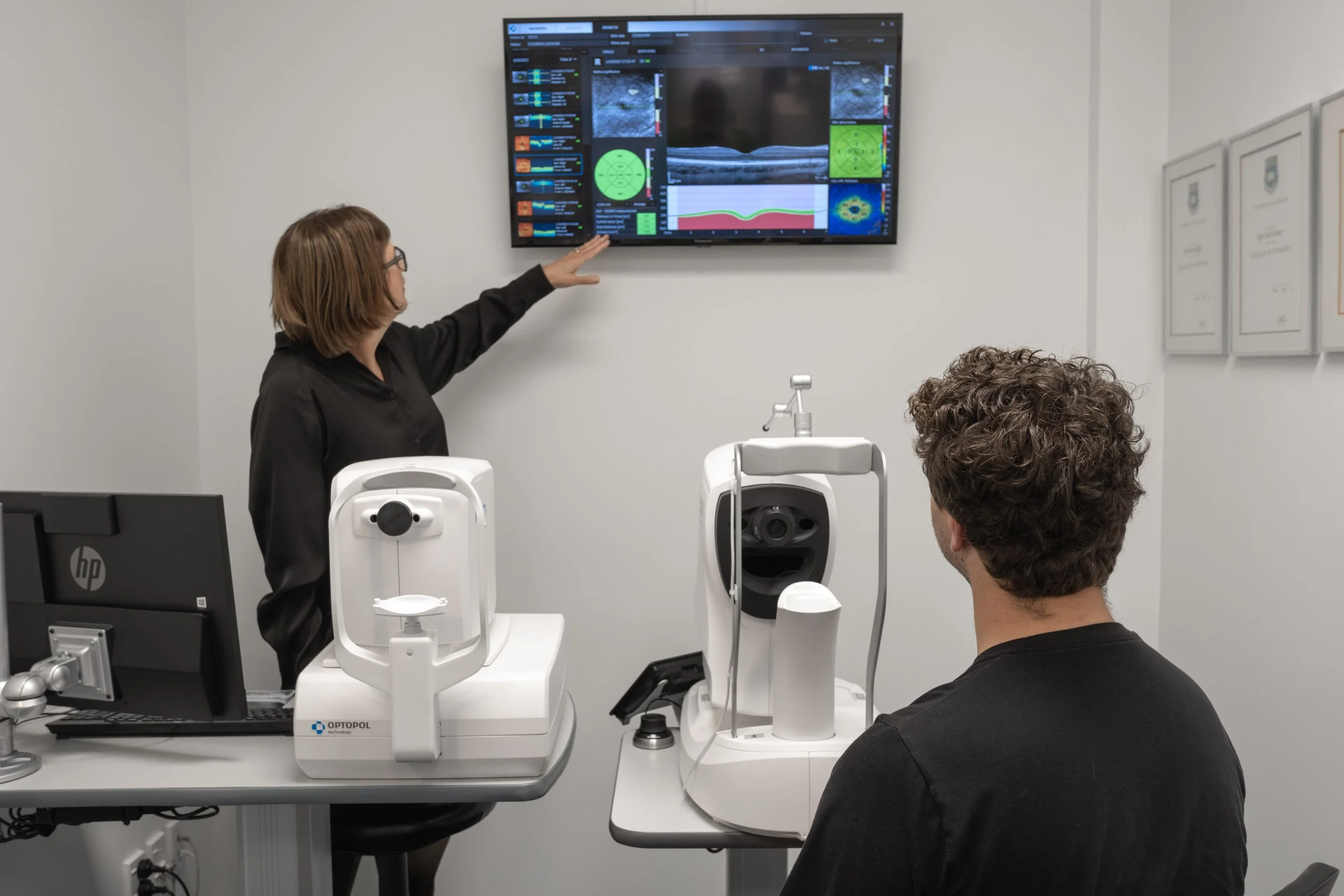
Optometrist Leith explaining OCT scan
“So, what does that mean for me?”
This is where we think the conversation really matters.
We don't just want to tell you, “You've got a bit of cataract,” or “You're becoming more long-sighted,” and then send you on your way.
You might quite reasonably ask:
“What does that mean?”
“Will it get worse?”
“Do I need to do anything about it now?”
“What are my options?”
“What can I expect over the next few years?”
Those are good questions.
And you deserve enough time to have them answered properly.
Your eyes are likely to change as you get older. Some changes are completely normal. Others need to be monitored more carefully. Sometimes there are things you can do now that will help manage your vision in the future.
Our job is not just to identify those changes. It’s to help you understand them.
You can't rush a good conversation
This is one of the reasons we don't think a comprehensive eye examination can be squeezed into a quick 20-minute appointment.
There are the tests to do.
There are the results to consider.
There are your previous records and history to think about.
And then there is the bit that we think is particularly important — talking to you.
We want you to understand what we've found and what it means for you.
And we want you to have time to ask questions.
Sometimes there are lots of questions.
That's okay.
We'd much rather you left CapitalEyes thinking, “I understand what’s happening with my eyes,” than wondering what the optometrist actually meant.
Your eyes aren't the same as everyone else's
One of the things we enjoy most about optometry is that there really isn't a “standard” patient.
Everyone's eyes are different.
Your prescription is different. Your family history may be different. Your work and hobbies are different. Your visual demands are different. And your expectations for your vision may be different too.
So your eye care shouldn't be completely standardised either.
That's why getting to know you matters.
And that's where continuity of care comes in
One of the lovely things about working at CapitalEyes is the number of people who have been coming to us for many years.
Some of our clients have been seeing the same optometrist for more than 30 years.
Think about how much can change in 30 years!
We've seen changes in their vision, their glasses, their work, their families and their lives. We've also built up a history of their eyes.
That history is valuable.
When we see you year after year, we're not just looking at what your eyes look like today. We can compare them with where they've been before.
We get to know your vision and what is important to you.
And if something changes, we have a better understanding of whether it's a new development or simply part of a pattern we've been watching over time.
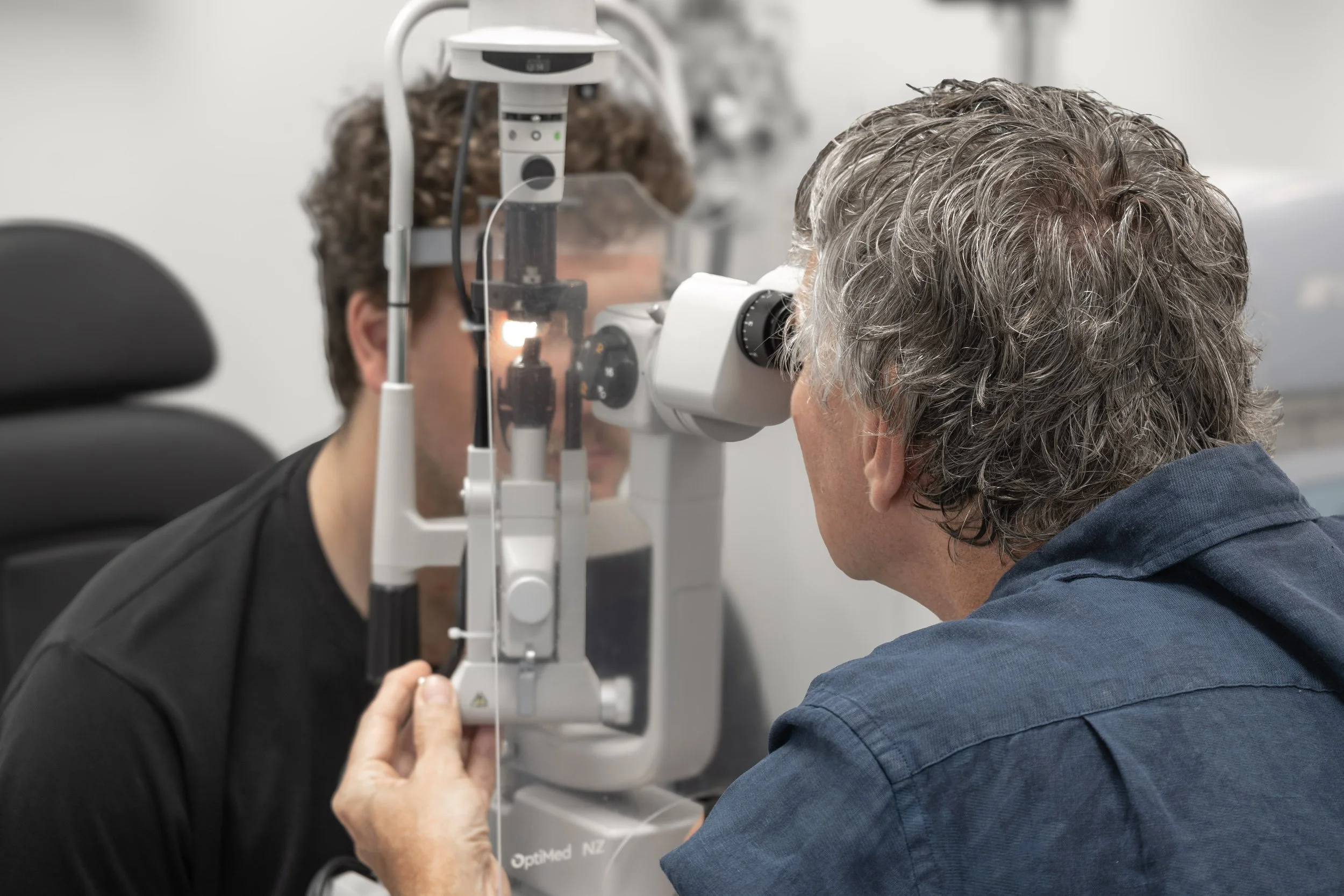
Optometrist Kevin checking eye health
So, how long should an eye check take?
Well, our answer is: long enough to do it properly.
We don't want to rush your eye examination just to fit it into an arbitrary amount of time.
We want enough time to examine your eyes thoroughly, talk through what we've found, explain your options and answer your questions.
Because a comprehensive eye examination isn't just about finding out whether you need stronger glasses.
It's about understanding your eyes, your vision and what may lie ahead.
And that's worth taking a little time for - so expect an appointment for 40 - 60 minutes at CapitalEyes.
Take time for your eyes.
If it's been a while since your last eye examination, we'd love to see you at CapitalEyes in Karori, Wellington.
Come in, take a seat, and let's take the time to have a proper look at your eyes.
Your eyes are worth it.
Frequently Asked Questions About Eye Examinations
How long does a comprehensive eye examination take?
At CapitalEyes, we allow 40–60 minutes for a comprehensive eye examination. This gives our optometrists enough time to thoroughly examine your vision and eye health, then discuss the findings with you and answer your questions.
We don't believe a thorough eye examination should be rushed. Taking the time to understand your eyes and explain your options is an important part of good optometric care.
How often should I have an eye examination?
If your eyes are healthy, your vision is stable and there are no particular concerns or risk factors, we generally recommend a comprehensive eye examination every two years.
However, some people need to be seen more frequently depending on their age, eye health, family history, prescription or other individual circumstances.
If you wear contact lenses, we recommend an annual review. Contact lens wear involves additional considerations for the health of the front surface of your eyes, so regular reviews are important even when your vision seems unchanged.
Your optometrist will recommend the most appropriate interval for you.
What does a comprehensive eye examination check?
A comprehensive eye examination looks at much more than whether you can see clearly with your glasses or contact lenses.
Your optometrist assesses your vision and prescription, examines the health of your eyes and looks for signs of eye conditions or changes that may need monitoring or further investigation.
The examination is also an opportunity to discuss your eye health, your visual needs and any changes you have noticed.
Can an eye examination detect cataracts, glaucoma or macular degeneration?
Yes. A comprehensive eye examination can identify signs of cataracts, glaucoma and changes affecting the macula, including signs that may be associated with macular degeneration.
An optometrist can also identify risk factors or early changes that may not yet be affecting your vision noticeably. If something requires further investigation or specialist care, we can explain what we've found and recommend the appropriate next step.
Why does my optometrist need to know about my general health?
Your general health, medications and family history can sometimes be relevant to your eyes and vision. Conditions such as diabetes, for example, can affect eye health, while some medications and family histories can be important when assessing your risk of particular eye conditions.
That's another reason we take time to talk with you, rather than simply checking your eyesight.
What if my vision seems fine?
That's great — but it doesn't necessarily mean your eyes are completely healthy.
Some eye conditions can develop without obvious symptoms in their early stages. A comprehensive eye examination gives your optometrist the opportunity to look for changes that you may not notice yourself.
And if everything is healthy and stable, that's reassuring too. Your optometrist can keep a record of your eye health so that changes can be identified more easily over time.
Why is continuity of care important?
Seeing the same optometrist over time means they get to know you, your vision and your eye health history.
At CapitalEyes, some of our clients have been seeing the same optometrist for 30 years or more. Being able to compare your eyes with previous examinations can be very helpful when monitoring changes over time.
Everyone's eyes are different, and continuity helps us provide care that's tailored to you.
When should I have my next eye examination?
If it's been around two years since your last comprehensive eye examination, it may be time to book.
If you wear contact lenses, we recommend an annual review. You should also arrange an appointment sooner if you've noticed a change in your vision, have concerns about your eyes, or have been advised to have more frequent examinations because of your eye health or risk factors.
At CapitalEyes in Karori, Wellington, we take the time to examine your eyes properly, explain what we find and answer your questions.
Take time for your eyes.