
APPOINTMENTS
At CapitalEyes we have comprehensive consultations for all our clients.
We take the time to listen to you and explain your vision care options.
Not everyone needs glasses and we can treat most red eye problems.
We also offer appointments for children.
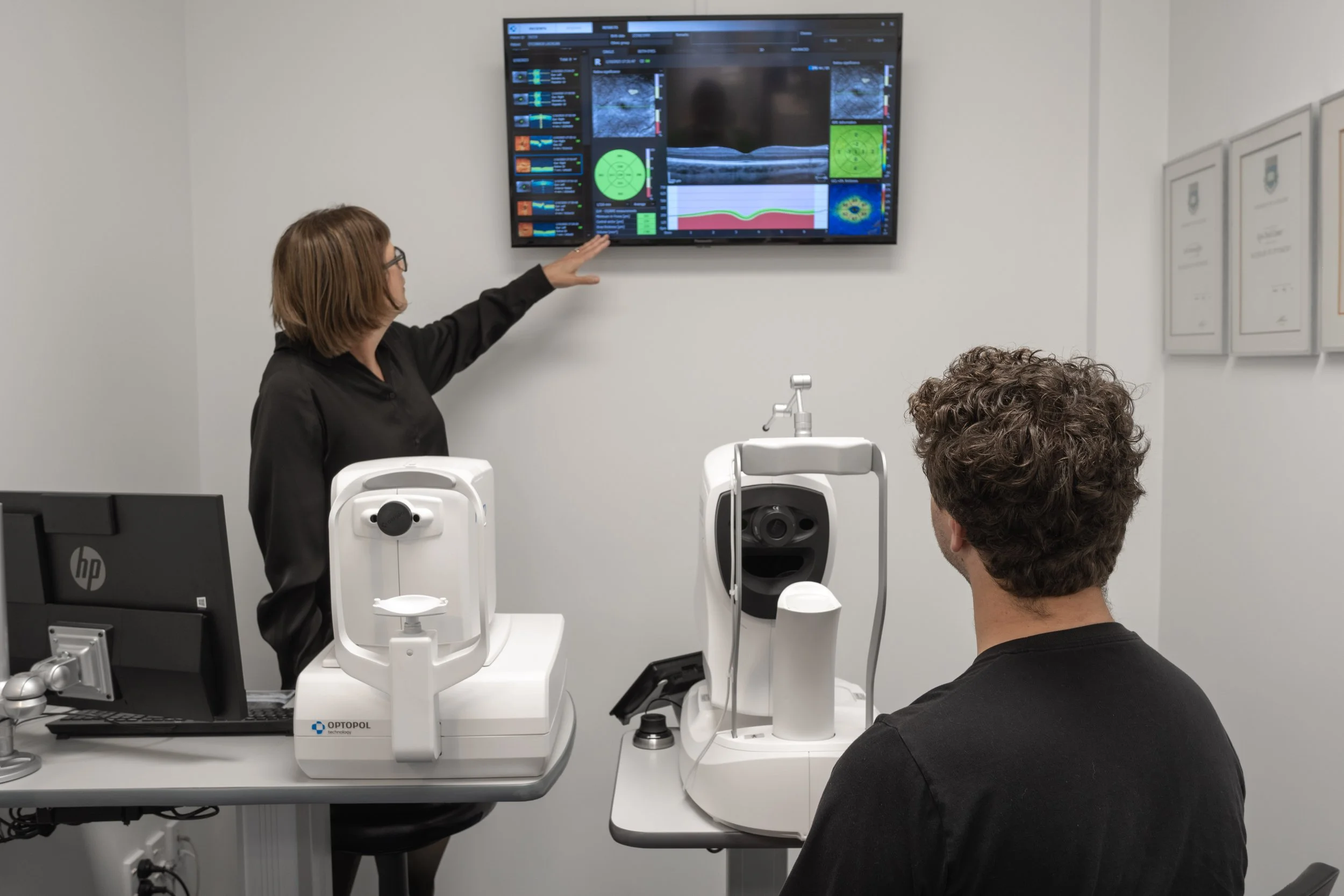
Leith O’Connor showing OCT images
Comprehensive Consultation
An appointment for a comprehensive eye consultation takes time. We will check your vision and eye health, then discuss the results and recommendations with you. If you haven’t been to CapitalEyes before, we allow an hour for your first appointment.
Understanding about your eyes and vision, and knowing your options is important. Not everyone needs glasses and we will make sure you are correctly informed about our findings.

Book your child’s optometrist appointment with CapitalEyes
Appointments for children
We love kids, and know that younger children need a consultation tailored to them and their attention span. When booking children, our team will look forward to meeting your child and helping them enjoy the experience of having their eyes checked.
Tailored to you
Our consultations are tailored differently depending on what you need. So please advise our team when booking if you:
Have a sore or red eye and need an urgent appointment
Wear contact lenses
Are a Police recruit
Have recently had laser eye surgery
Have recently had recent cataract surgery
Might need assistance for your wheelchair or walker
Consultation FAQs
-
At CapitalEyes, we allow 40–60 minutes for a comprehensive eye examination. This gives our optometrists enough time to thoroughly examine your vision and eye health, then discuss the findings with you and answer your questions.
We don't believe a thorough eye examination should be rushed. Taking the time to understand your eyes and explain your options is an important part of good optometric care.
-
When you come to see us for an eye examination, of course we want to know whether your glasses or contact lens prescription needs changing.
But that’s only part of what we’re doing.
We’re also looking at the health of your eyes and considering whether there are any changes or risk factors that need attention or monitoring.
Perhaps you’re myopic (short-sighted). Or maybe you’re hyperopic (long-sighted) or starting to notice the effects of presbyopia — that frustrating stage when your arms suddenly don't seem quite long enough to read the menu!
Perhaps we’re seeing early cataract changes, or there are signs or risk factors that could be associated with glaucoma. Maybe there are changes around the macula that we need to monitor, including early signs or risk factors for macular degeneration.
Finding these things is important. But what happens after we find them is important too.ion text goes here
-
If your eyes are healthy, your vision is stable and there are no particular concerns or risk factors, we generally recommend a comprehensive eye examination every two years.
However, some people need to be seen more frequently depending on their age, eye health, family history, prescription or other individual circumstances.
If you wear contact lenses, we recommend an annual review. Contact lens wear involves additional considerations for the health of the front surface of your eyes, so regular reviews are important even when your vision seems unchanged.
Your optometrist will recommend the most appropriate interval for you.
-
A comprehensive eye examination looks at much more than whether you can see clearly with your glasses or contact lenses.
Your optometrist assesses your vision and prescription, examines the health of your eyes and looks for signs of eye conditions or changes that may need monitoring or further investigation.
The examination is also an opportunity to discuss your eye health, your visual needs and any changes you have noticed.
-
Yes. A comprehensive eye examination can identify signs of cataracts, glaucoma and changes affecting the macula, including signs that may be associated with macular degeneration.
An optometrist can also identify risk factors or early changes that may not yet be affecting your vision noticeably. If something requires further investigation or specialist care, we can explain what we've found and recommend the appropriate next step.
-
Your general health, medications and family history can sometimes be relevant to your eyes and vision. Conditions such as diabetes, for example, can affect eye health, while some medications and family histories can be important when assessing your risk of particular eye conditions.
That's another reason we take time to talk with you, rather than simply checking your eyesight.
-
That's great — but it doesn't necessarily mean your eyes are completely healthy.
Some eye conditions can develop without obvious symptoms in their early stages. A comprehensive eye examination gives your optometrist the opportunity to look for changes that you may not notice yourself.
And if everything is healthy and stable, that's reassuring too. Your optometrist can keep a record of your eye health so that changes can be identified more easily over time.
-
Seeing the same optometrist over time means they get to know you, your vision and your eye health history.
At CapitalEyes, some of our clients have been seeing the same optometrist for 30 years or more. Being able to compare your eyes with previous examinations can be very helpful when monitoring changes over time.
Everyone's eyes are different, and continuity helps us provide care that's tailored to you.
-
If it's been around two years since your last comprehensive eye examination, it may be time to book.
If you wear contact lenses, we recommend an annual review. You should also arrange an appointment sooner if you've noticed a change in your vision, have concerns about your eyes, or have been advised to have more frequent examinations because of your eye health or risk factors.